


When there are many water heaters to choose from in the market, deciding on the right geyser that would be ideal for your household can be quite confusing. There are electric, gas, instant, and solar-powered geysers among others in the market; each of these geysers has been made for specific households depending on their requirements, budget, and fuel source. When you have issues with your fuel supply, high electricity cost, or you need a portable geyser for your bathroom, learning how different geysers function will help in making a better buying decision.
Here, we will explain how the 6 types of geysers (electric, gas, instant, storage, solar, and immersion rods) work, and what their pros and cons are in addition to identifying which type of geyser would be appropriate for your home. We will also highlight important factors to consider when purchasing a geyser, and we will conduct a brief comparison of gas, electric, and instant geysers.
Explore 6 Types of Geysers in 2026
Geysers are generally categorized by their heating method (electric, gas, or solar) and their delivery method (instant vs. storage). Below, we cover the six most common types available in Pakistan today.
1. Electric Geysers
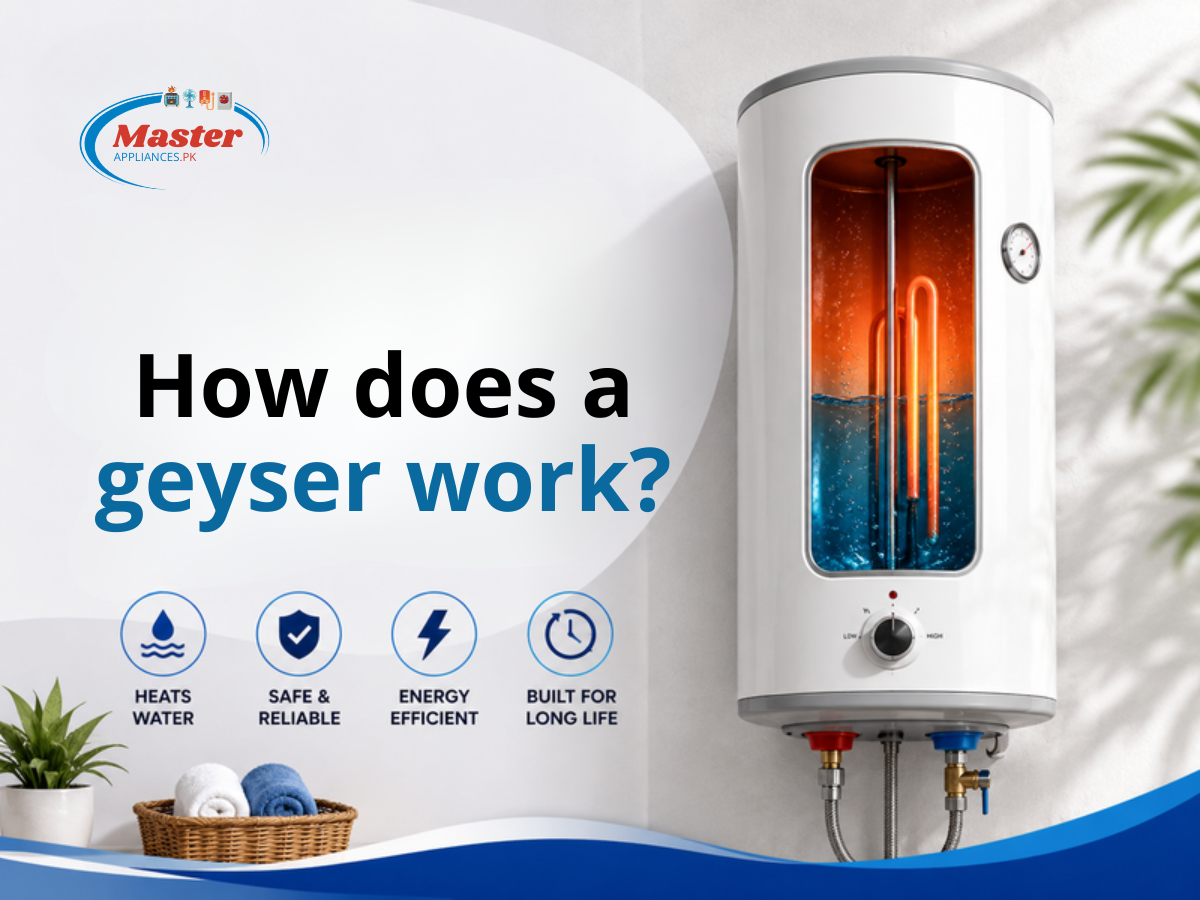
Electric geysers use a heating element submerged in an insulated water tank to warm water, which is then stored until needed. Available in capacities ranging from 6L to 50L+ with thermostat-controlled temperature settings, they don’t depend on a gas supply, are safer for indoor installation, and offer consistent hot water availability. On the downside, they consume more electricity and take longer to heat water than gas models. These are best suited for homes with an unreliable gas supply, or areas where the electric geyser price in Pakistan fits the budget better than running new gas lines.
2. Gas Geysers
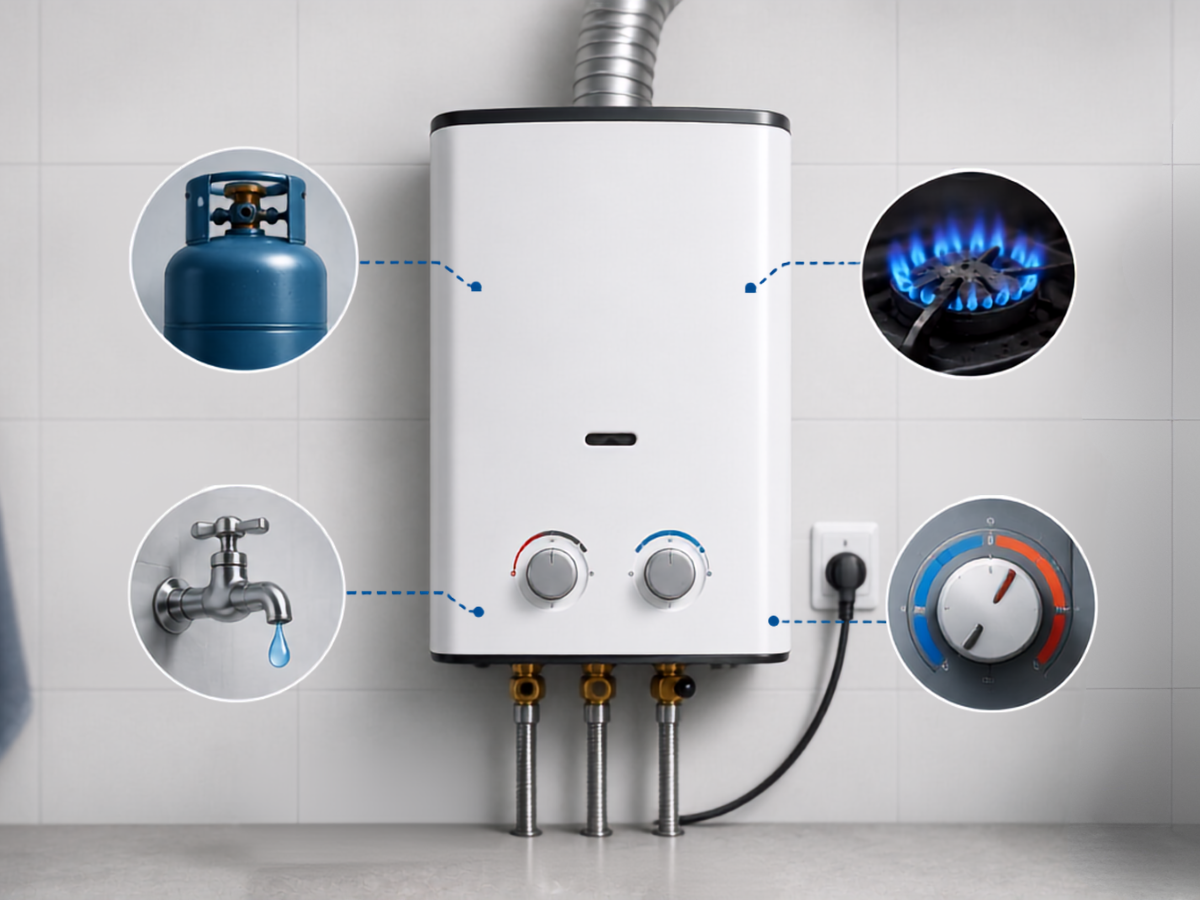
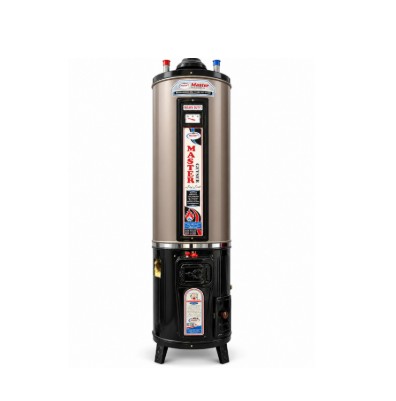
Gas geysers function using a gas burner that heats the flowing water, or heating the water in a storage tank. They run on natural gas or LPG and heat the water much quicker compared to electrical geysers and can operate during electricity load shedding, hence cost-effective in regions where the gas is economical. The disadvantages include their need for a gas connection and adequate ventilation, apart from the safety issues if wrongly installed. Gas geysers are more ideal for homes where there is an abundant gas supply.
3. Instant Geysers
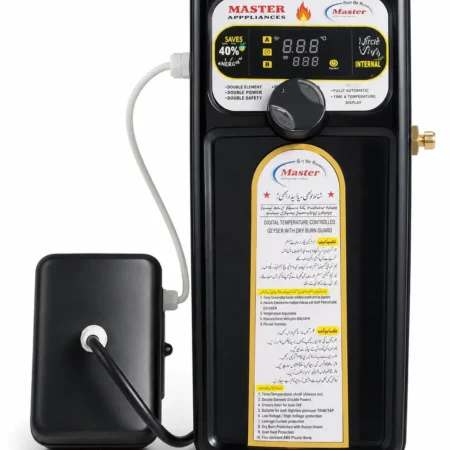
Instant geysers heat up water instantly when flowing through the appliance; they do not have any storage tanks. While storage geysers are used to provide hot water by heating the water in the tank first, instant geysers begin heating right from the time when the tap is switched on. Due to their small size and efficiency, they do not have any standby losses and provide hot water continuously without any delay or storage of the tank being refilled. Instant geysers are most appropriate for bathrooms and kitchens, where only one point of water usage is available. One reason the instant geyser price in Pakistan is such a commonly searched topic among urban buyers.
4. Storage Geysers
Storage geysers heat and hold a set volume of water in an insulated tank, ready for use whenever needed. Common tank sizes range from 15L for small households to 50L+ for larger families, and the stored water stays hot over time, making it possible to supply multiple taps at once. This makes storage geysers best suited for families who need hot water at multiple points, such as the kitchen and bathroom, simultaneously.
5. Solar Geysers
Storage geysers heat and hold a set volume of water in an insulated tank, ready for use whenever needed. Common tank sizes range from 15L for small households to 50L+ for larger families, and the stored water stays hot over time, making it possible to supply multiple taps at once. This makes storage geysers best suited for families who need hot water at multiple points, such as the kitchen and bathroom, simultaneously. They’re also a practical choice for households with inconsistent water pressure, since the tank provides a steady, ready-to-use hot water reserve regardless of flow rate.
6. Immersion Rods
An immersion rod is a portable electric heating element that’s placed directly into a bucket or container of water. It’s very affordable, portable, and requires no installation, making it a practical backup option when needed. However, it’s not suitable as a primary hot water source for a whole household, as it’s slower and less convenient for daily use. Immersion rods are commonly used for backup heating during load-shedding, in hostels, or for single-room use.
How to Choose the Right Type of Geyser
Before buying, consider:
- Gas or electricity availability in your area
- Daily hot water requirements for your household
- Family size, bigger families need higher capacity or storage models
- Installation space available in your bathroom/kitchen
- Energy consumption and monthly utility budget
- Water pressure in your home (affects instant geyser performance)
Gas vs Electric vs Instant Geysers
Feature | Gas | Electric | Instant |
Heating method | Gas burner | Heating element | On-demand heating |
Water storage | Usually no | Yes, depending on model | No |
Heating speed | Fast | Moderate | Fast |
Installation | Requires gas/ventilation | Easier | Compact setup |
Best for | Regular high hot-water demand | Homes with electricity | Smaller spaces |
Which Geyser Is Best for Your Home?
Household Situation | Recommended Geyser |
Large families with steady gas supply | Gas storage geyser |
Homes without reliable gas access | Electric storage geyser |
Small apartments or single bathrooms | Instant electric geyser |
Long-term savings and sustainability focus | Solar geyser with backup |
Budget-tight or backup needs only | Immersion rod |
Conclusion:
Selecting the appropriate geyser is a function of your access to either gas or electricity, the number of people in your family, and how much hot water you need every day. The most commonly used geysers are electric or gas geysers, instant geysers are good for small homes, storage geysers are perfect for large families, and solar geysers are economical in the long run.
Find the Perfect Geyser for Your Home
Ready to upgrade your home’s hot water system? Browse our full range of electric, gas, and instant geysers at Master Appliances PK and find the perfect fit for your home and budget.
Frequently Asked Questions
Can I install a geyser myself?
Basic units like immersion rods don’t need installation, but electric, gas, and solar geysers should be installed by a professional to ensure safety and proper functioning.
How long does a geyser typically last?
With proper maintenance, most geysers last between 8 to 15 years, depending on the type, water quality, and usage.
Which geyser heats water faster?
Gas and instant geysers generally heat water faster than standard electric storage geysers.
Are solar geysers suitable for every home?
Solar geysers work best for homes with adequate roof space and consistent sunlight; a backup heating source is recommended for cloudy days or winter.