


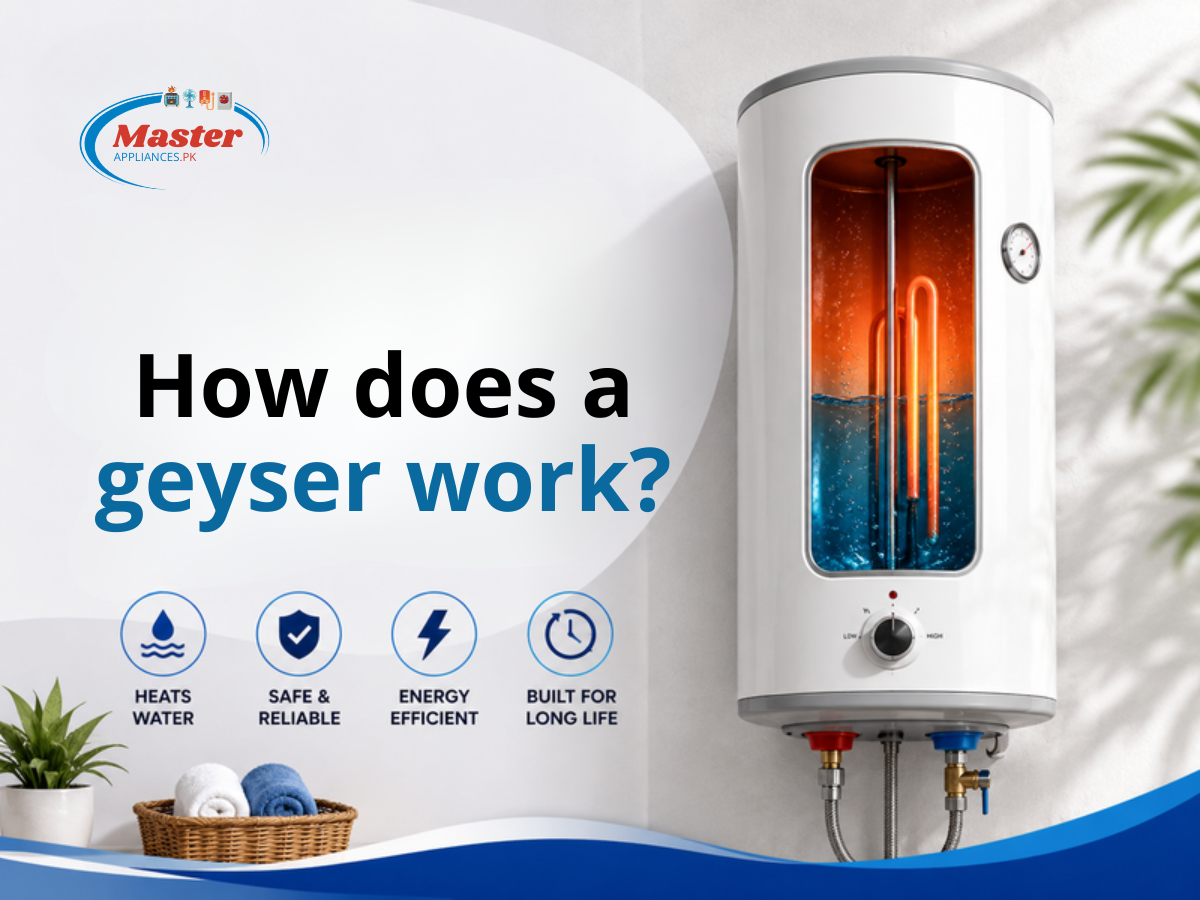
Geyser is one of those devices whose functioning and presence do not interest anyone until you have a cold shower in the middle of the process. The process of heating water behind the constant supply of hot water is a relatively simple one and involves a heating element, a thermostat, and proper sequences of hot and cold.
How does a geyser work then? In case you want to know the answer to this question for various reasons such as fixing a problem with a heater or choosing which type is better for your household, knowing how your geyser works might come in handy.
In this guide, we’ll talk about the geyser working principle step by step, break down its core components, and compare how gas, electric, instant, and storage geysers each get the job done.
How Does a Gas Geyser Work?
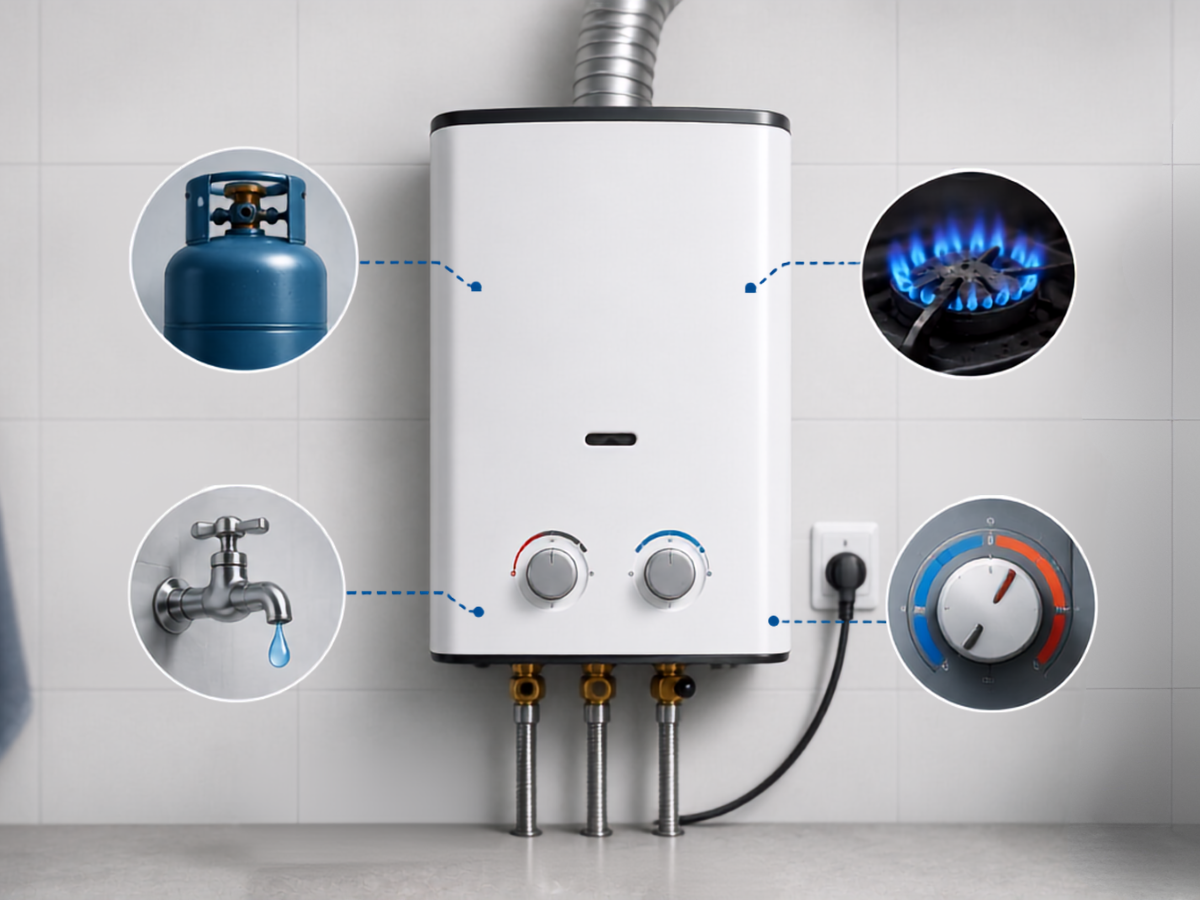
A gas geyser heats water through the use of a gas burner and not an electrical heating element. Once you turn on the tap, the flow of water ignites the burner using the pilot light or electronic ignition, and the water is heated in the process and then released through the outlet.
Unlike the electric geysers, gas geysers heat water relatively faster and can operate without the use of electricity, hence the reliability during power cuts. However, gas geysers need good ventilation for safety purposes.
Geyser Working Principle
- Cold water enters the geyser through the inlet pipe and fills the tank or passes through the heating chamber.
- The heating element or burner then heats this water to the desired temperature.
- The thermostat continuously monitors the water temperature and switches the heating element on or off to keep it within the set range, preventing overheating and saving energy.
- Once heated, the hot water is either stored in the tank for later use or delivered immediately, depending on the geyser type.
- As hot water is drawn out through the outlet pipe, cold water automatically flows in through the inlet to replace it, and the heating cycle repeats to bring the new water up to temperature.
Main Components of a Geyser
Every geyser, regardless of type, relies on a few core parts working together:
- Heating element/burner: It raises the water temperature; an electric coil is used in electric models and a gas burner in gas models
- Thermostat: It monitors and regulates temperature, switching the heating element on or off to maintain a set level
- Water tank: It stores heated water (storage geysers) or briefly holds water as it passes through (instant models)
- Inlet and outlet pipes: They manage the flow of cold water in and hot water out
- Pressure relief valve: It protects the unit from pressure buildup
- Insulation: It retains heat around the tank and improves efficiency
How Do Different Types of Geysers Work?
The following content describes how different types of geysers work:
Gas Geyser
A gas geyser uses a gas burner instead of an electric coil to heat water. When the tap is turned on, water flow triggers the gas burner (via a pilot light or electronic ignition) to fire up. As water passes over the heated burner chamber, it warms rapidly and flows out through the outlet.
Gas geysers heat water faster than most electric models and don’t rely on electricity to function, making them a reliable option during power outages. However, they do require proper ventilation to safely expel combustion gases.
Electric Geyser
An electric geyser uses an electric heating element submerged in the water tank. When switched on, the element heats the surrounding water, while the thermostat maintains the set temperature by cycling the element on and off.
Electric geysers are widely used because they’re simple to install and don’t need gas piping or ventilation. The trade-off is that they typically take longer to heat water than gas models and consume more standby electricity if left on continuously.
Instant Geyser
Water flows through a compact heating chamber and is heated almost immediately as it passes through, with no storage tank involved. This means hot water is available within seconds, but only in small volumes at a time, suited to point-of-use taps rather than whole-house supply.
How Long Does a Geyser Take to Heat Water?
The heating time for an electrical geyser ranges from 15 to 60 minutes, depending on the capacity and wattage of the geyser. On the other hand, the gas geysers heat up water instantly, in a matter of seconds. The same applies to the instant geysers that heat water in seconds as well but in smaller amounts.
The following factors have an influence on the time needed for heating up:
- Tank capacity
- Heating element wattage or burner output
- Incoming water temperature
- Thermostat setting,
- Insulation of tank
Geyser Safety Features and Precautions
The pressure relief valve is a key safety component; it vents the pressure in case there is overheating or excessive pressure building up, thus preventing the bursting of the tank. In most geysers, there is an automatic system for the overheating protection, which cuts off the heater in case there is a dangerous rise in water temperature.
When installing gas geysers, it is important to ensure the presence of appropriate ventilation so that all the combustion products including carbon monoxide would leave the premises safely.
Tips for Using a Geyser Efficiently
The temperature of the geyser should be set to an optimal temperature level (i.e. 50-60°C) as opposed to maximum temperature levels because it leads to unnecessary wastage of energy and causes scaling. Proper insulation should be done on the geyser tank and on the pipes exposed to the atmosphere. It is advisable to turn off the geyser whenever it is not being used.
Common Geyser Problems
Problem | Likely Cause |
No hot water | Faulty heating element or tripped thermostat |
Water taking too long to heat | Sediment buildup or a failing element |
Leaking from the pressure relief valve | Excess pressure or valve wear |
Unusual noises | Sediment buildup causing popping or rumbling |
Inconsistent temperature | Thermostat malfunction |
Frequently Asked Questions
How does a gas geyser work without electricity?
Gas geysers use a pilot light or battery-powered ignition to fire the burner, so they can function during power outages.
How long does a geyser take to heat water?
Electric storage geysers take 15-60 minutes for a full tank; gas and instant geysers heat water within seconds as it flows through.
Does a geyser continuously heat water?
Storage geysers maintain hot water continuously via thermostat cycling, while instant geysers only heat water as it’s being used.
How can I make my geyser more energy efficient?
Use moderate thermostat settings, insulate the tank and pipes, and turn off the unit during long periods of non-use.