



Selecting the right appliance to help cope with the intense heat of summer is often difficult and confusing, mainly because an individual may find that there are many alternatives available in the market that do the job of cooling. Air conditioners and air coolers are one such example, there are certain differences that one must know before purchasing either.
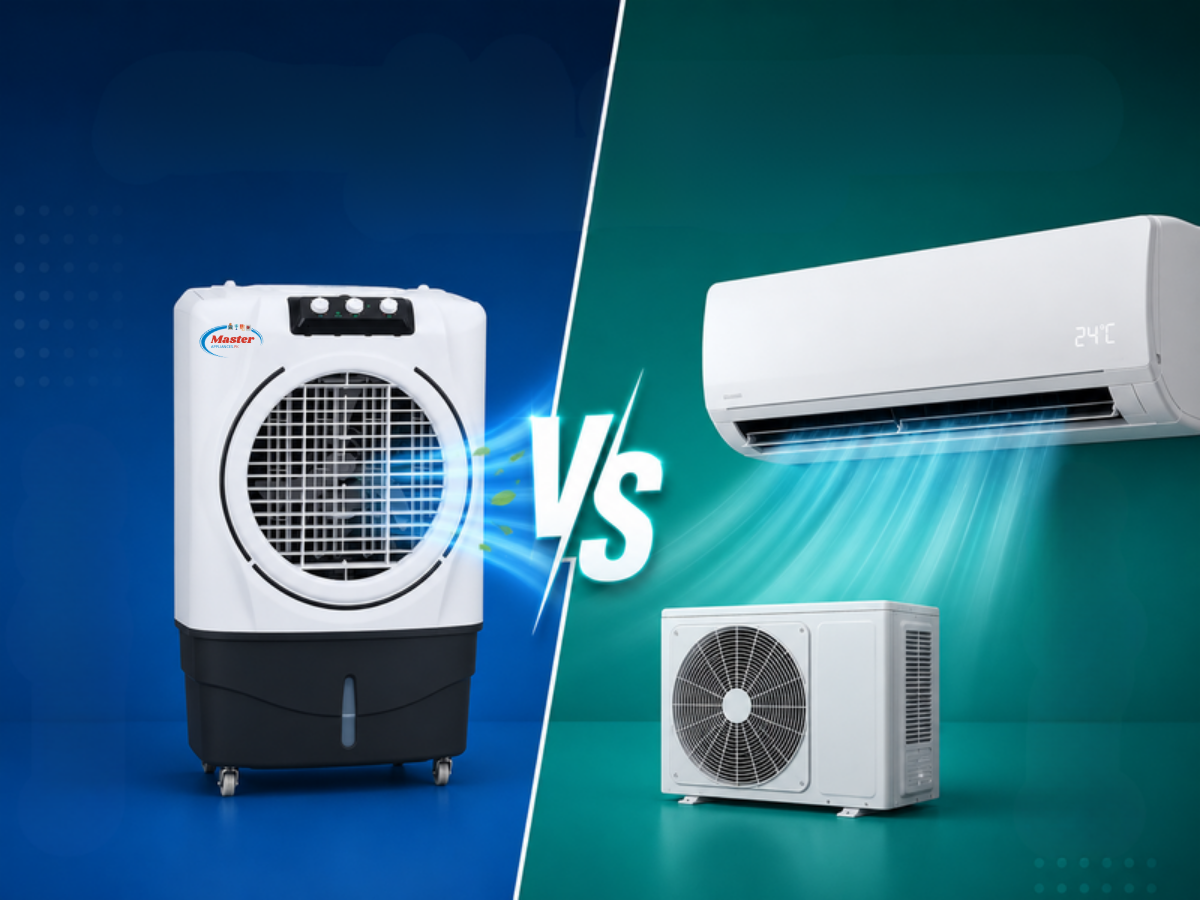
In this guide, we’ll compare air cooler vs air conditioner in detail, covering how each appliance works, their cooling performance, electricity consumption, purchase and running costs, maintenance, environmental impact, and ideal use cases.
Air Cooler vs Air Conditioner: Quick Comparison
Before diving into the details, here’s a quick comparison between an air cooler and an air conditioner.
Feature | Air Cooler | Air Conditioner |
Cooling Method | Evaporative cooling using water | Refrigeration cycle with compressor |
Electricity Consumption | Low | High |
Initial Cost | Affordable | Expensive |
Installation | Usually not required | Professional installation required |
Maintenance | Simple and inexpensive | More frequent and costly |
Portability | Easy to move | Mostly fixed in one location |
Best Climate | Hot and dry | Humid and extremely hot |
Eco-Friendliness | Uses water and natural airflow | Uses refrigerants and higher energy |
Noise Level | Moderate | Low to moderate |
Lifespan | Around 8–12 years | Around 10–15 years |
What Is an Air Cooler?
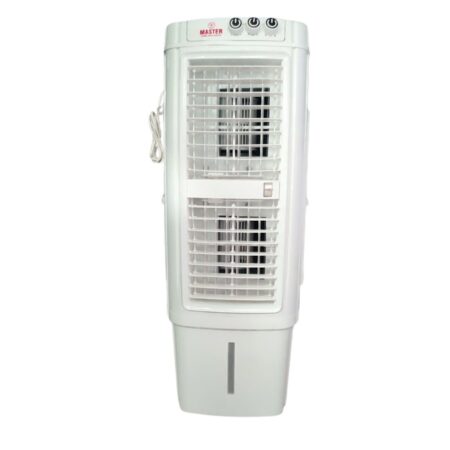
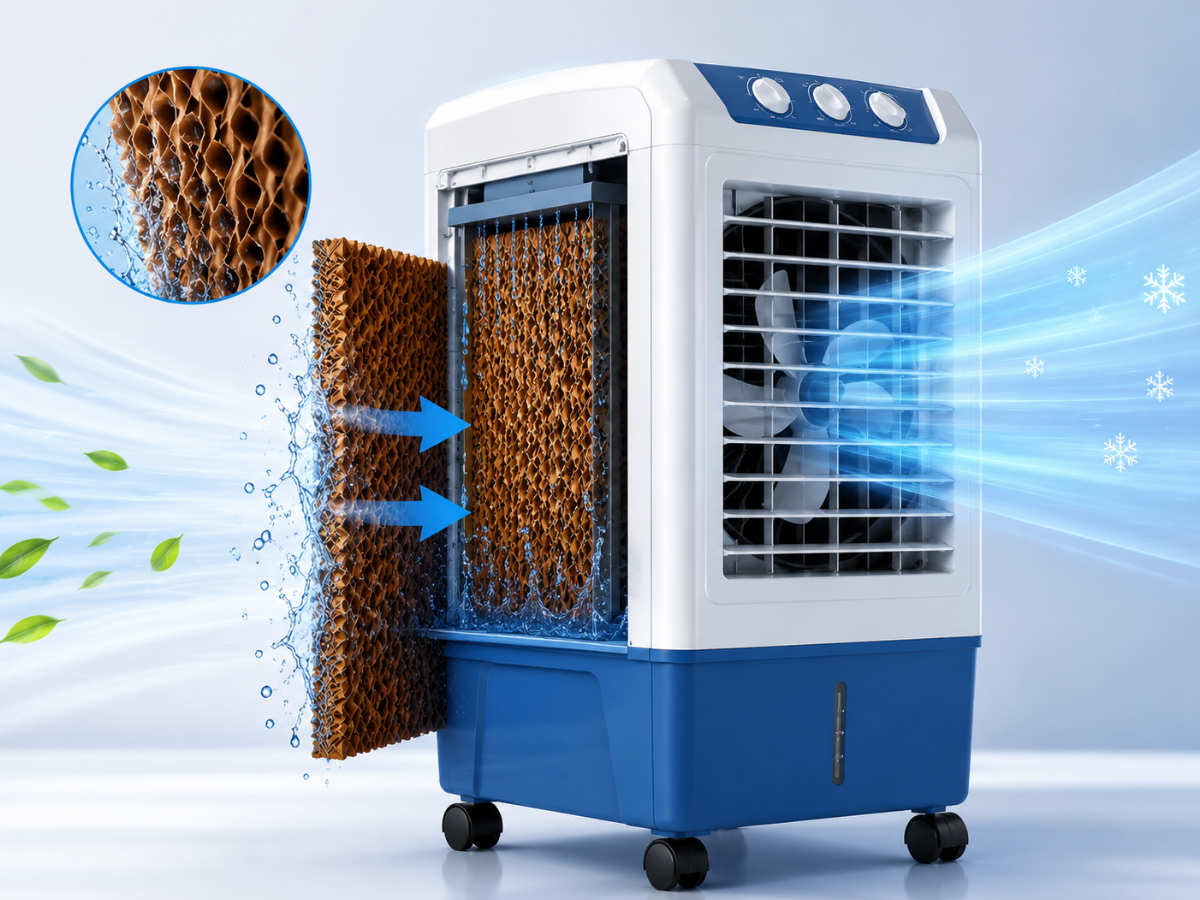
Air cooler is an energy-efficient cooling machine that makes use of the process of water evaporation to provide cooling in place of refrigerants and compressors. The way it operates is that it moves warm air through water soaked cooling pads and then provides fresh and cooled air in the room. As such, it becomes a cost-effective and environmentally friendly cooling option. You can select desert, tower, personal, and commercial air coolers depending upon your requirements, and since an air cooler gives better results when used in hot and dry environments without the consumption of more energy, it is considered to be the best cooling device.
What Is an Air Conditioner?
An air conditioner is a type of cooling device that cools down the indoor air by taking out the heat and moisture from it using a refrigerant and a compressor to keep the indoor temperature steady. It differs from an air cooler as it provides strong cooling irrespective of the amount of humidity outside, and thus is more suited for a hot and humid environment. There are different types of air conditioners such as split air conditioners, window air conditioners, and portable air conditioners to choose from depending upon your requirements.
Air Cooler vs Air Conditioner: Key Differences
Although both appliances are designed to keep indoor spaces cool, they differ significantly in performance, operating costs, and maintenance requirements.
Cooling Performance
Air conditioners offer quicker and more reliable cooling since they actively extract heat from indoor air. They can keep a steady temperature irrespective of weather conditions outside.
Air coolers cause cooling via the process of evaporation, which makes them very effective in areas with low humidity levels.
Electricity Consumption
An air cooler typically consumes 70–250 watts, while a standard household air conditioner often uses 900–2,000 watts or more, depending on its capacity.
If your priority is lowering monthly electricity bills, an air cooler is clearly the more economical option.
Purchase Cost
Air coolers have a much lower purchase price, making them ideal for budget-conscious households.
Air conditioners require a larger initial investment due to the appliance itself and installation charges.
Maintenance Requirements
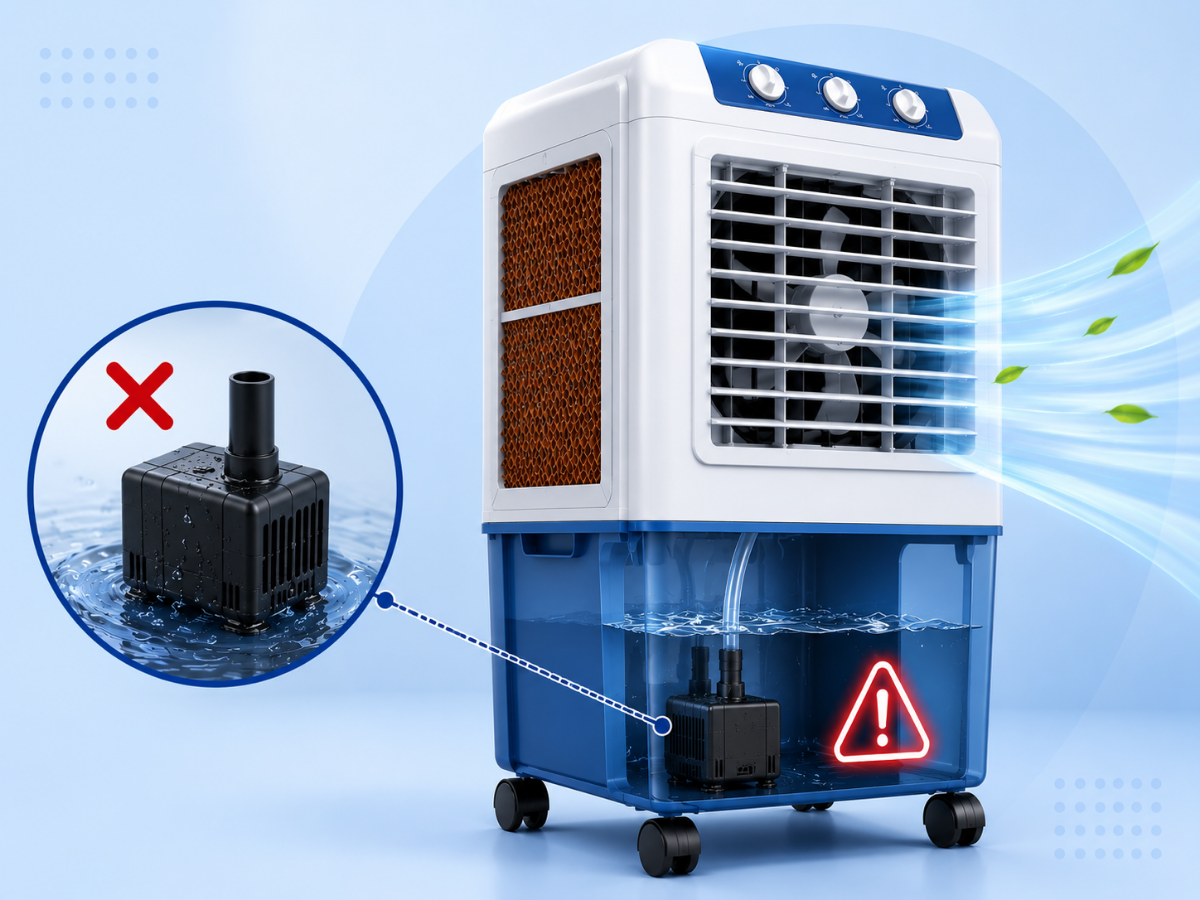
It is relatively easy to maintain an air cooler. Simple cleaning of the water tank, cooling pads, and the fan is generally all that is required to make it function effectively.
On the other hand, air conditioners need proper servicing and refrigerant testing, which can prove quite expensive.
Installation
Most air coolers are ready to use immediately after filling the water tank and plugging them in.
Air conditioners usually require professional installation, wall mounting, refrigerant piping, drainage, and electrical work.
Noise Level
Modern air conditioners generally operate more quietly than large air coolers.
Air coolers may produce noticeable fan noise, especially commercial and desert models designed for high airflow.
Environmental Impact
Air coolers consume less electricity and don’t rely on chemical refrigerants, making them an environmentally friendly cooling option.
Air conditioners use refrigerants and require considerably more electricity, increasing their environmental footprint.
Portability
Most air coolers include wheels, allowing users to move them from one room to another whenever needed.
Split and window air conditioners remain fixed after installation, limiting their flexibility.
Lifespan
With proper maintenance, both appliances can last many years. Air conditioners often have a slightly longer service life, while air coolers remain easier and less expensive to repair.
Which Is Better for Different Situations?
The answer depends entirely on your needs. Let’s look at which appliance works best in different situations.
Small Rooms
Both options can work well in smaller rooms.
An air cooler will come in handy if you want to have cooling without high electricity costs. But when your desire is always having cold air indoors, irrespective of the temperature outside, then an air conditioner will serve the purpose.
Large Rooms
Big rooms need better cooling abilities. Air coolers that are commercial can cool big spaces with great air flow. Big air conditioners give better cooling ability for enclosed rooms.
Offices
For enclosed offices where employees spend long hours, air conditioners generally provide greater comfort. In well-ventilated offices or workshops, commercial air coolers can be a cost-effective alternative.
Commercial Spaces
Factories, warehouses, restaurants, and event halls often require cooling over large areas. Commercial air coolers are commonly preferred because they consume significantly less electricity while delivering high airflow across open spaces.
Dry Climates
If you live in a hot and dry region, an air cooler for dry climate conditions is one of the best cooling solutions available. Evaporative cooling performs exceptionally well where humidity is low, producing cooler and fresher air.
Humid Areas
A humid air conditioner works more efficiently than an air cooler because it not only cools but dehumidifies the air at the same time. This is because the evaporation process becomes inefficient in a humid environment.
Is an Air Cooler Better Than an AC in Pakistan?
Climate is also varied in various cities of Pakistan. Therefore, the better cooling appliance depends on the city one lives in. Air coolers prove to be highly effective in cities with hot and dry summers like Lahore, Islamabad, Faisalabad, and Multan. The second issue that needs to be considered is the cost of electricity. Due to the rising cost of energy, the number of people who use air coolers has increased because these devices use much less electricity compared to air conditioners.
Another issue that should be taken into account is load shedding. In case of power outages, many air coolers can run with the help of UPS and even solar systems. So, when trying to choose the better appliance for cooling in Pakistan, take into account climate, room size, and cost of electricity per month.
Would you also like to read: Air Cooler Spare Parts: Comprehensive Guide
How to Choose the Right Cooling Solution
Still unsure whether you should buy an air cooler or AC? Contact us today and ask us questions about anything related to cooling solutions, being an air cooler manufacturer we will guide you the best.
Final Verdict
In the case of comparison between air cooler and air conditioner, there is not a universal answer that applies to everyone. Your choice will depend on your budget, local climatic conditions, room size and cooling requirements. You can select an air cooler for energy efficiency or air conditioner for outstanding performance.
Frequently Asked Questions
Can an air cooler cool an entire room?
Yes, provided the room is well ventilated and the cooler is appropriately sized. Larger spaces may require a desert or commercial air cooler.
Which is healthier: an air cooler or an AC?
Air coolers continuously circulate fresh air, whereas air conditioners recirculate indoor air. However, both are safe when cleaned and maintained regularly.
Is an air cooler worth buying in Pakistan?
Yes. In many parts of Pakistan with dry summer conditions and rising electricity prices, air coolers offer excellent value for money.
Can an air cooler replace an air conditioner?
It depends on your environment. In dry climates, an air cooler can be an effective alternative. In humid regions, an air conditioner generally provides better comfort.
Leave a comment